


INTRODUCTION
LITERATURE REVIEW
1. TAM and its variants
2. Factors affecting the adoption of EVs
3. Role of gender in EV adoption
4. Gaps in existing research and contributions of this study
DATA AND METHOD
1. Data collection
2. Extended TAM
3. Measurement
HYPOTHESIS DEVELOPMENT FOR THE EXTENDED TAM
1. Connections and justifications in the TAM
2. Connections and justifications in the extended TAM
RESULTS AND DISCUSSION
1. TAM
2. Extended TAM: Pooled model
3. Extended TAM: Male participants’ model
4. Extended TAM: Female participants’ model
5. Comparison
CONCLUSIONS
LIMITATIONS
INTRODUCTION
The escalating levels of carbon dioxide (CO2) emissions have been a key global concern since the 1970s. CO2 emissions have experienced an approximately 90% surge, primarily due to the combustion of fossil fuels and industrial activities, which together account for approximately 78% of total global greenhouse gas emissions (IPCC, 2014). A myriad of longitudinal studies have reported that approximately 14% of these CO2 emissions are caused by transportation fuels, and their share is continuously growing. As the CO2 emissions from the transportation sector grow, there is an increasing concern over the role that passenger cars play in contributing to air pollution, which accounts for 47% of all contamination sources (IEA, 2017). In this context, eco-friendly vehicles are rapidly emerging as a viable solution to the greenhouse gas problem. Among these sustainable options, electric vehicles (EVs) play an important role in reducing atmospheric contamination and transportation costs. Historically, EVs have been considered a means to mitigate the consequences of greenhouse gases in cities and to enhance the economic and health benefits for citizens (Requia et al., 2018). EVs are posited to decrease fossil-fuel consumption due to their superior efficiency compared to vehicles powered by internal combustion engines. Recent research has focused on the advantages of EVs over typical cars with an internal combustion engine in terms of maintenance costs, noise pollution, driving comfort, and the enhancement of the driver’s self-image (Thomas, 2009). Nevertheless, in the vehicular registry of South Korea for the year 2022 (Ministry of Land, 2022), EVs constitute a mere 1.5% portion amidst the vast aggregate of over 25.5 million registered automobiles. These factors serve as motivations for researchers to further explore the acceptance and adoption of EVs in the urban context.
Despite their expected benefits, EVs suffer from several major drawbacks, such as high battery-replacement costs, driving ranges that fail to meet customer expectations, insufficient charging infrastructure, and high retail price owing to a lack of economies of scale (Hidrue et al., 2011; Pasaoglu et al., 2014). The price of EVs is currently nearly twice as high as that of vehicles with internal combustion engines. This is because the most expensive component of an EV is the battery, which accounts for almost half of its total price. The driving range for EVs is contingent on the amount of energy that their batteries can store. Fortunately, with advances in battery technology, the cost of EV batteries has recently decreased and the range has increased. Other disadvantages of EVs include the substantial time required for recharging and uneven distribution of charging stations. Charging-station infrastructure will consistently increase due to public policies that encourage widespread EV use. This will hopefully guarantee a reliable supply of electricity across cities. Congruently, technological advances are likely to continuously reduce the time for recharging.
Notwithstanding the foregoing, debates continue about the best strategies for the management of the adoption of EVs in society. Despite their environmental benefits, the widespread acceptance and adoption of EVs remain inconsistent across different demographic groups, with gender emerging as a significant factor influencing purchase behavior. Understanding the role of gender in shaping attitudes toward EVs is critical for creating targeted marketing strategies, developing policy incentives, and designing useful and user-friendly technologies that can encourage broader adoption. It is necessary here to clarify exactly what is meant by gender. Based on a definition provided by (Blackburn, 2005), gender is the socially configured roles, behaviors, expressions, and identities where masculine and feminine behaviors are expected from men and women, respectively. Research has shown that men and women often display different attitudes toward technology and environmental issues, which can extend to the adoption of EVs. These gendered preferences influence the decision-making process and can shape the perceived value of incentives, such as government subsidies, or economic benefits such as taxes and rebates, which are crucial in overcoming the barriers to EV adoption. To address this gap, this study applied the technology acceptance model (TAM), one of the most influential and commonly employed theory for describing an individual’s acceptance of new technology (Seuwou et al., 2020) to answer the following research questions. 1. What are the key factors influencing the acceptance and use of EVs in South Korea, considering differences in perceived usefulness (PU) and perceived ease of use (PEU)? 2. How do gender differences influence the acceptance and adoption of EVs in South Korea, particularly regarding perceptions of trust, environmental benefits, innovativeness, and risk? By answering these questions, the research seeks to provide insights that could guide the development of more inclusive and effective strategies to accelerate the adoption of EVs across different gender demographics. In particular, extended TAMs were utilized to capture the impacts of various factors other than the basic elements of a simple TAM: users’ perceptions about the usefulness and ease of use of new technology. The set of variables includes users’ concern about the environment, risk-taking attitudes, innovativeness, perceived economic benefits of EVs, and the degree of trust in EVs. A survey was systematically designed and conducted targeting 1,500 prospective car buyers in major cities of South Korea. The collected responses (750 for each of men and women) were used to develop the extended TAMs and assess gender differences in the acceptance of EVs in South Korea.
This paper adopts a cross-disciplinary approach by integrating the TAM, its extended TAM, and segmentation by gender within the realm of policies and marketing. TAM provides a theoretical framework for understanding user acceptance and adoption of technology, focusing on factors such as PEU and PU. The extended TAM incorporates seven additional deliberate variables to enhance its predictive power. In this study, both TAM and extended TAM were employed to investigate the nuanced dynamics of EVs acceptance in the context of gender segmentation in South Korea. This investigation contributes to EV-market research by examining extensive characteristics influencing customer intentions and showing the gender-based prominence of diverse EV opinions with a view to expanding the academic offer regarding the knowledge of the TAM and extended TAM, policy implications, social inferences, market share, and sales volume. These results prompt policy makers to analyze consumer profiles in terms of their inclinations and intentions toward the likelihood of using EVs after controlling for the gender trait. The findings will be of significance to the automotive sectors and other stakeholders in helping them develop target-oriented tactics that encourage people to use and purchase EVs.
LITERATURE REVIEW
The TAM has been widely used to explain user acceptance of new technologies, particularly by examining factors such as PU and PEU. However, for a more comprehensive analysis of EV adoption, the model can be extended to include additional factors such as environmental concern, social influence, and psychological factors. Integrating gender-related measures into this framework allows for a nuanced understanding of how men and women differ in their acceptance and attitudes toward EVs. The literature review of this study attempts to address the following key questions: How do gender differences influence PU and PEU of EVs? What role does environmental concern play in the gendered adoption of EVs? How does social influence shape gender-specific attitudes toward EV adoption? Are there gender-based variations in risk perception or financial concerns related to EV adoption? What is the impact of gender-specific marketing and policy interventions on the acceptance of EVs? This literature review will integrate gender-specific insights with the extended TAM framework to comprehensively analyze how gender influences the acceptance of EVs. By focusing on key variables like PU, PEU, environmental concern, and social influence, the review will provide a gender-sensitive approach to understanding EV adoption patterns and identify effective strategies to increase their market acceptance across diverse demographic groups.
1. TAM and its variants
The first serious discussion and analyses of the relationship between attitudes and behaviors within human action emerged during the 1960s with the theory of reasoned action (TRA), which is widely used to predict how individuals will behave based on their pre-existing attitudes and behavioral intentions (Funke and Fishbein, 1976). In other words, the theory attempts to explain how attitude, subjective norms, and perceived behavioral control together shape an individual’s behavioral intentions (Ajzen and Fishbein, 1980). The TRA underpins the TAM and its variant, the extended TAM, which combines external factors other than attitude. Much of the current literature on EVs particularly focuses on the TAM. (Park et al., 2018) validated the TAM and added enjoyment, satisfaction, and cost as external factors, with cost being a negative predictor for EV adoption. Another study that describes the role of the TAM in EV adoption is (Seuwou et al., 2020). By drawing on the concept of the TAM, this study showed that the effectiveness of autonomous vehicles, their safety on the streets, and buyers’ trust in the players in the autonomous-vehicle industry would be crucial factors in the widespread acceptance of this technology. As noted by (Tu and Yang, 2019), the TAM indicates that consumers’ self-control ability to acquire EVs has the greatest influence on their behavioral intention, followed by their opinions on the surroundings. (Müller, 2019) applied the TAM to compare autonomous vehicles, EVs, and car sharing across Europe, China, and North America. This study indicated that attitudes toward autonomous driving and car-ownership behavior are influenced by how much people enjoy driving EVs.
The Unified Theory of Acceptance and Use of Technology 2 (UTAUT2) posits that performance expectancy, effort expectancy, social influence, and facilitating conditions are fundamental determinants influencing users' behavioral intentions and actual usage of technology. UTAUT2 integrates additional factors such as hedonic motivation, price value, and habit into its structure. Drawing on the UTAUT2 and the Norm Activation Model (NAM), (Singh et al., 2023) employed an integrated model to scrutinize the adoption intentions of prospective consumers of EVs. Through a questionnaire survey conducted among potential consumers in Himachal Pradesh, India, their results unveiled that performance expectancy, facilitating conditions, hedonic motivation, price value, and personal norms wield significant positive influences on consumers' intentions to embrace EVs. Conversely, effort expectancy, social influence, and habit exhibited negligible impacts on adoption intentions. In a parallel vein, (Irfanto and Aprilianty, 2022) endeavored to comprehend the low prevalence of EVs in Indonesia by examining consumer adoption patterns. Employing variables from the UTAUT2 model, supplemented by technophilia, perceived environmental knowledge, perceived functional risk, perceived financial risk, and perceived time risk from previous studies, their investigation revealed that only performance expectancy and habit held substantive sway on behavioral intention to utilize electric vehicles. Subsequently, both habit and behavioral intention surfaced as pivotal determinants of EV use behavior.
While the existence and significance of the UTAUT2 is acknowledged, this approach in this study incorporates the TAM to leverage its distinct advantages. TAM, with its roots in PEU and PU, provides a straightforward framework to understand user acceptance of technology. Its simplicity facilitates clearer insights into user behavior and adoption patterns. By utilizing TAM, this research aims to capitalize on its well-established foundation and user-centric focus, allowing it to tailor its strategies effectively.
2. Factors affecting the adoption of EVs
A large and growing body of literature has investigated the factors that affect the acceptance of EVs and inclinations toward their use. For example, (Singh et al., 2020) analyzed a total of 211 peer-reviewed research articles published between 2009 and 2019, covering the main categories of demographic, situational, contextual, and psychological factors. They concluded that the high retail price and limited driving range were key barriers to EV adoption. Numerous studies focus on psychological factors including positive and negative characteristics of consumer attitudes, subjective norms, and perceived behavior. (Yan et al., 2019), for instance, showed the following: (1) low pollution emissions, low cost, and government support policies lead to positive consumer attitudes; (2) media propaganda, government-subsidy policies, high-quality supplier services, and the construction of the Internet of Cars platform have positive subjective norms; and (3) economic strength and charging resources impact perceived behavior. Recent research has focused on the effects of environmental concerns on EV purchase intentions, showing that environmental awareness directly affects the likelihood of their purchase (Okada et al., 2019). The literature provides solid evidence that the adoption of EVs is influenced not only by environmental reasons but also by engagement with economic aspects, performance, charging stations, and policy themes.
Over the past decade, a substantial body of research focusing on the adoption of EVs has indicated that environmental interests and an individual’s perceived social image and reputation in their community circle are significantly interrelated (Vongurai, 2020). Many of the current theoretical reports on EVs pay particular attention to the environment, image, policy support, economic benefits, and trust as the main factors in the adoption of EVs (Yuen et al., 2021). Several empirical studies have focused on environmental and price issues in the approval of electric automobiles (Degirmenci and Breitner, 2017), while a systematic review by (Liao et al., 2017) confirmed an association between consumer preferences for financial, technical, infrastructure, and policy attributes. Survey conducted by (Wu et al., 2019) showed that while zero tailpipe emissions are the most desirable feature of an EV, followed by home charging, the limited range of the vehicle is regarded among the top-listed issues about EV uptake. Commenting on the obstacles to the introduction of EVs, (Bhalla et al., 2018 p.362) argued that “environmental concerns and consumer trust on technology are an antecedent factor for perception about EVs purchase and the factors which give adoption blowback are cost, infrastructure, social acceptance.”
Consequently, in an era of rapid societal changes, environmental and cost paradigms alone may not sufficiently describe how individuals interact with new technologies. This indicates a need to understand the perceptions of subsidy, environment, image, economy, trust, innovativeness, and risk factors as major variables for the adoption of EVs is academically justified based on the prior comprehensive literature review. Each of these factors plays a significant role in shaping consumers' attitudes and behaviors toward EV adoption, and their inclusion is supported by empirical evidence and theoretical frameworks. The identified variables collectively offer a holistic understanding of the multifaceted drivers and barriers influencing the adoption of EVs. Moreover, this comprehensive set of variables enables us to develop a robust model and framework for predicting and explaining consumer behavior in the context of EV adoption, contributing to the academic discourse and informing policy and industry practices.
3. Role of gender in EV adoption
Gender difference has often been dealt with as an important factor in the adoption of EVs (Sovacool et al., 2019). For instance, (Lomazzi, 2017) offered an acute assessment of gender opinions that are part of the fourth wave of the European Values Survey to appraise the importance of EVs. In her research, not only gender is considered but also educational level, employment status, and other factors. (He et al., 2018) showed the roles of personality and perception as critical aspects of consumer purchase intention for EVs. In addition to gender, they use age, income, and education as control variables. According to (Berkeley et al., 2018), socio-technical issues are significantly correlated with gender, while economic uncertainty is significantly correlated with age and geography. Investigating gender is also a continuing concern among EV-adoption factors, as shown in (Haustein and Jensen, 2018). Age, education, employment status, income, and household composition are additional sociodemographic factors used in the study. They discovered that EV users are generally men, who have high levels of education and income, and frequently own multiple vehicles.
Researchers have recently examined the effects of gender on the acceptance of EVs. Men’s preferences in the acquisition of EVs differ from women’s. (Sovacool et al., 2019) found that women place less emphasis on acceleration, power, or sound, whereas men assigned more weight to range, sex appeal, and acceleration. Another study has also found differences between the preferences of men and women, concluding that differentiated services should be provided to each gender group of consumers, considering their different ways of emotional expression (He and Hu, 2022). In recent years, there has been a growing body of literature on the importance of the diversification of EVs for men and women, with the intention of increasing sales volume and market share by manufacturing companies (Siekkinen, 2022). (Okada et al., 2019) hypothesized that environmental awareness might influence the intention of non-EV owners and post-purchase satisfaction of EV owners. This study further suggested that promotional efforts highlighting the environmental benefits of EVs could be more effective in enhancing purchase intentions among women, while advertisements emphasizing performance aspects could more significantly impact men. Zhang et al. (2022) employ a moderator approach within the framework of an extended TAM, where gender is used as a moderating variable to assess its impact on the relationships between the key TAM constructs and behavioral intention to adopt EVs. This methodological distinction is critical, as Zhang et al.’s use of gender as a moderator allows for an interaction effect to be modeled between gender and the other factors influencing EV adoption. This approach provides a nuanced understanding of how gender alters the strength and direction of the relationships among the various predictors in the TAM. However, previous studies have rarely investigated gender as the primary variable. This indicates the need to understand the diverse perceptions of EVs that exist among men and women. Given that men and women are likely to behave differently when purchasing EVs, as suggested in the previous studies, an in-depth understanding of the difference is crucial to developing and deploying effective strategies for increased adoption of EVs.
The outcomes of numerous studies on EVs remain uncertain, largely because they do not differentiate between factors that affect men and women differently in their acceptance of EVs. These factors, which characterize each gender’s preferences, necessitate individual analysis. A gender differences approach is important for the acceptance of EVs due to the observed variations in attitudes, preferences, and behaviors between men and women. Understanding and addressing these gender differences can significantly impact the successful adoption and widespread use of EVs. The conclusions of prior studies may be appropriate for assessing the entire population as a homogeneous group but gender segmentation allows businesses, organizations, and policymakers to tailor their strategies and offerings to better meet the needs of diverse consumer groups. Given this context, it is crucial for policy makers and EV manufacturers to recognize gender disparities in relation to EV usage. Unlike previous research in which gender was treated as simply one component of the determinants, this study proposes two distinct models, subsequently dividing the data into two subsets based on gender, thereby facilitating a detailed analysis of gender differences.
4. Gaps in existing research and contributions of this study
While the existing literature provides a comprehensive understanding of factors influencing EV adoption, several limitations persist. Many studies applying the TAM and its variants focus on broad consumer groups without adequately considering gender as a central variable. Although some research has examined gender as a moderating factor, few studies have explicitly explored the direct and unique influences of gender differences on EV adoption behavior.
Moreover, while previous studies have identified various determinants—such as environmental concerns, economic factors, and technological perceptions—their findings often remain inconclusive due to inconsistent methodologies and regional variations. For instance, some studies suggest that financial concerns are significant barriers to EV adoption, whereas others find psychological and social factors more influential. This indicates a gap in systematically analyzing how these factors interact differently for men and women.
Additionally, a critical limitation in prior research is its tendency to generalize findings across populations without segmenting consumers by gender. Many studies have treated gender as a secondary or control variable rather than an integral factor in shaping EV adoption behavior. This approach overlooks the nuanced ways in which men and women assess factors such as perceived usefulness, perceived ease of use, risk perception, and social influence.
In contrast, this study takes a more targeted approach by developing two distinct models for men and women, allowing for a more granular analysis of gender-specific factors affecting EV adoption. By explicitly segmenting the data, this study provides deeper insights into how gender influences decision-making processes, offering more tailored recommendations for policymakers and EV manufacturers.
This research also integrates gender-based marketing and policy interventions into the extended TAM framework, an area largely underexplored in previous studies. By doing so, it aims to offer practical implications for designing gender-sensitive policies and marketing strategies that could enhance the adoption of EVs across diverse consumer demographics.
DATA AND METHOD
1. Data collection
This study was conducted in September 2019 using a trusted online survey company with demographic segmentation capabilities, allowing for the inclusion of participants from diverse age groups, genders, and socioeconomic backgrounds. To ensure a representative sample, predefined quotas were established based on key demographic indicators, such as region, age, and income level. These quotas aimed to match the general population distribution and cover a broad spectrum of potential respondents. Before the full-scale survey, a pilot survey was conducted to refine the survey design, methodology, and instruments. This pilot phase involved selecting a small group of participants to test the survey instruments, followed by data analysis to identify any issues. Adjustments were then made to improve accuracy and relevance before launching the full-scale survey. To further enhance the reliability of the results, post-survey weighting was applied to correct for any remaining demographic imbalances. These strategies helped ensure that the sample closely mirrored the population, thereby improving the generalizability of the findings. The respondents were asked specific questions to measure users’ attitudes and perceptions regarding EVs on a seven-point Likert scale from 1 (= strongly disagree) to 7 (= strongly agree). By the end of the survey period, data had been collected from 1,500 individuals, 750 of whom were men and 750 were women. This share was intentionally designed during the sampling procedure by regulating the participation of the survey panels to avoid biased responses in the sample. The participants were recruited from different metropolitan areas across South Korea, covering Seoul, Busan, Daegu, Incheon, Daejeon, Ulsan, Sejong, Gyeonggi, Chungbuk, and Chungnam. The sample comprised age groups in their 20s (300 participants), 30s (370 participants), 40s (370 participants), 50s (300 participants), and 60s (160 participants), with an equal gender distribution in each group. According to the population census data from the Korea Statistical Information Service (KOSIS) in 2020, the percentage of men and women by age were 20 years old, 14% and 12%, 30 years old, 14% and 13%, 40 years old, 16% and 16%, 50 years old, 17% and 17%, and 60 years old, 13% and 13%, respectively. This differs from the percentage used in the sample for this research since the population under 20 years old and over 70 years old were not considered in this study. It also comprised six income-level groups, with the largest group (35.5% of the total sample) being those who earned 4 to 6 million KRW per month (USD 3.5 to 5 thousand). More detailed information about this dataset can be found in (Lashari et al., 2021).
Another section of the questionnaire asked respondents to report their attitudes toward and perceptions of EVs. To evaluate their attitudes toward EVs, a questionnaire related to the TAM statements was presented. Regarding the perceptions of EVs, seven items (subsidy, environment, image, economy, trust, innovativeness, and risk) were measured to identify the extent to which external factors affected users’ attitudes, behavioral intention, and actual use of technology (Table 4). According to the eligibility criteria, only those who planned to acquire a new car or replace an existing one with a new one within the next three years were allowed to participate in the survey. Table 1 shows a descriptive analysis of the participants, with a favorable response rate of 90.3% for the intention to purchase EVs, implying preliminary acceptance of EVs in the Korean market.
Table 1.
Sample characteristics (n = 1500)
Table 2 provides a breakdown of EV ownership among 1,500 survey participants, categorized by gender, age group, and household income. Among the participants, only six individuals (0.4%) own EVs, with two being men and four being women. Regarding age distribution, two female EV owners fall within the 20–30 age group (0.1%), one female owner is in the 30–40 age group (0.1%), and three owners (two men and one woman) belong to the 60–70 age group (0.2%). In terms of household income, one EV owner earns less than 2 million KRW per month (0.1%), while three earn between 8–10 million KRW per month (0.2%), with two being men and one being a woman. Additionally, one woman in each of the income brackets of 2–4 million KRW/month and 4–6 million KRW/month owns an EV (0.1% each). The data suggests that EV ownership in the sample is relatively low and is more common among individuals in higher income brackets and older age groups.
Table 2.
EV ownership (n = 1500)
2. Extended TAM
This study applies the TAM, underpinned by the TRA (Davis, 1985), to investigate factors affecting customers’ intention to accept EVs measured on a 7-point Likert scale. According to the concept of the model as shown in Figure 1, the acceptance of EVs is governed by two major factors: PU and PEU. The degree to which a person feels that driving an EV would improve their performance is defined as PU. The degree to which a person feels that using EVs would be simple is referred to as PEU. The actual system use (ASU) is the point at which consumers utilize EVs. People are more likely to utilize EVs if they have a strong behavioral intention to do so. The constructs of PU and PEU impact behavioral intention. Hurdles are overcome if EVs are simple to use and beneficial. No one is likely to have a good opinion of EVs if they are not practical or easy to use (Davis, 1989). The extended TAM is a proposed addition to the original TAM, which includes external variables to investigate the effects of peripheral factors on behavioral intention and actual use of EVs. For this purpose, seven external influences on the acceptance of EVs (Table 4) were introduced in this study.
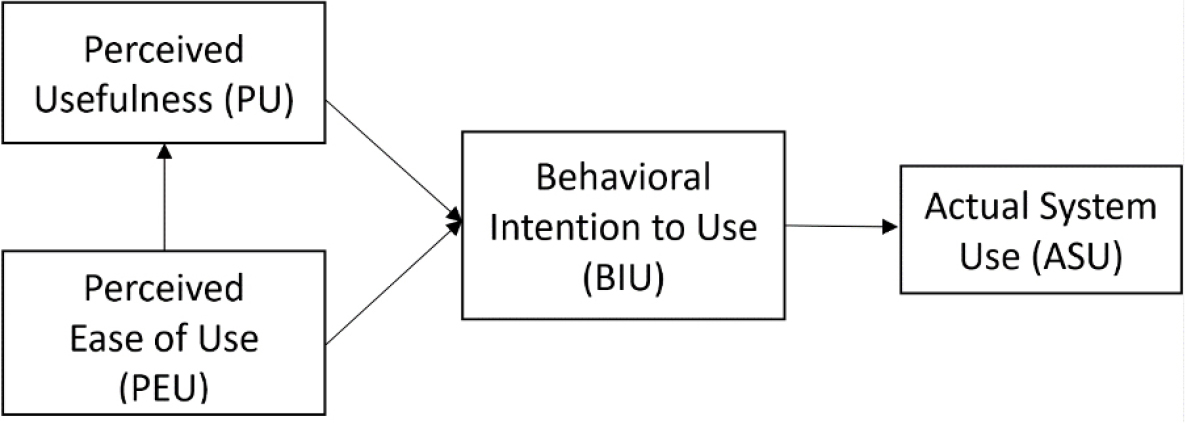
The TAM (or extended TAM) is identified using structural equation modeling (SEM). SEM is a multivariate statistical examination method that uses structural associations. This technique, which is an amalgamation of factorial exploration and linear regression, enables researchers to investigate the structural interdependencies between measured or observable variables and latent or hidden constructs. SEM was chosen due to its ability to simultaneously analyze complex relationships between multiple dependent and independent variables, as well as its strength in handling latent constructs. The measured variables are exogenous or independent variables measured and recorded by the researcher as data. Latent variables are endogenous or dependent variables that people conceptually understand but that cannot be directly assessed (Kline, 2016).
Due to its few elements, the TAM is simple to understand and has proven to be highly predictive in various situations. Meanwhile, the extended TAM additionally considers social and external factors. In particular, the extended TAM is employed in this investigation to reveal the gender differences regarding EV use. This method was utilized to uncover the factors influencing customers’ intentions to buy an EV based on gender disparities. These procedures were intended to present the most notable effects of the employed factors in the proposed model on purchase decisions of EVs by men and women.
3. Measurement
1) TAM elements
The participants’ mindsets were evaluated using the TAM to understand their attitudes, behavioral intentions, and actual use of technology. PU was assessed using two questions investigating the extent to which EVs would be considered beneficial and contribute to an improved quality of life. For PEU, questions were asked about the simplicity of charging EVs and whether insurance processing and handling would be streamlined in the event of an accident involving an EV. Regarding behavioral intention to use (BIU), three aspects were considered: confidence in EVs, fulfilment of expectations of EVs, and beliefs about the wisdom of utilizing EVs. Finally, beliefs about ASU were gauged using five questions, with participants being asked to indicate their level of agreement with the following statements: (1) I will use and purchase EVs, (2) I will recommend the use and purchase of EVs, (3) If I purchase an EV, I will dispose of the current internal-combustion-engine vehicle in use, (4) If I buy an additional vehicle in the future, it will be an EV, (5) I will continue to use EVs. Based on these questions, the average scores for each TAM element were calculated. These scores were then used as inputs for the construction of the SEM. Table 3 presents a list of the questions used to measure the TAM components.
Table 3.
TAM instruments for measuring people’ views on and attitudes toward EVs
| Constructs | Measurement items | Sources |
| Perceived usefulness | - Using eco-friendly vehicles will improve the quality of life. | (Davis, 1989; Taylor and Todd, 1995; Park et al., 2018) |
| - Eco-friendly vehicles will be useful in life. | ||
|
Perceived ease of use | - Eco-friendly vehicles will be easy to charge (accessibility and charging method). | (Davis, 1989; Taylor and Todd, 1995; Park et al., 2018) |
| - In the event of an accident while driving an eco-friendly vehicle, procedures such as insurance processing and handling will be simplified. | ||
| Behavioral intention to use | - I trust eco-friendly vehicles. | (Davis, 1989; Fishbein and Ajzen, 1977; Taylor and Todd, 1995; Park et al., 2018) |
| - Eco-friendlyvehicles will meet my expectations. | ||
| - I think it is wise to use eco-friendly vehicles. | ||
| Actual system use | - I will use and purchase an eco-friendly vehicle. | (Davis, 1989; Fishbein and Ajzen, 1977; Taylor and Todd, 1995; Park et al., 2018) |
| - I will recommend the use and purchase of an eco-friendly vehicle. | ||
| - If I purchase an eco-friendly vehicle, I will dispose of the internal-combustion-engine vehicle currently in use. | ||
| - When purchasing additional vehicles in the future, I will purchase them as eco-friendly vehicles. | ||
| - I will continue to use eco-friendly vehicles. |
2) Extended TAM elements
Users’ perceptions were measured by adding seven external variables to the TAM with the aim of exploring the effects of external factors on users’ attitudes, behavioral intention, and actual use of technology. Three questions were used to elicit the respondents’ thoughts about and impressions of new technologies in order to assess user innovativeness. Three environmental inquiries were raised, including whether the spread of EVs would assist in safeguarding the environment, whether EVs would reduce the emission of polluting gases into the air, and if the proliferation of this type of vehicle was compatible with current environmental regulations. Concerning EVs’ risk apprehensions, three items were incorporated: dread of new technology, overall operational safety level, and difficulties in dealing with circumstances in which unexpected problems arise. The level to which participants agreed with the assumptions that the purchase and repair costs of EVs would be lower than those of vehicles with internal combustion engines was used to gauge the participants’ perceptions of the economic benefits of EVs. The respondents were asked to rate their level of agreement regarding the perception of purchase subsidies using the following statements: (1) The level of purchasing subsidies will influence the degree of utilization, (2) Tax breaks and rebates will encourage people to buy EVs, (3) Financial incentives and corresponding policy assistance should be implemented concurrently. Meanwhile, social influence or image was assessed using two statements that asked how much they agreed with the following sentences: (1) I believe EVs are in keeping with social trends, and (2) I will be judged for being ahead of those around me by using electric automobiles. Finally, for the purpose of trust measurement, the subjects were asked to provide their evaluation of two statements: (1) I usually trust new technologies, and (2) I generally trust new-technology sources (private companies). Details about the statements on the attitude toward and perception of EVs are exhibited in Table 4.
Table 4.
External instruments for measuring people’ views on and attitudes toward EVs
| Constructs | Measurement items | Sources |
| Innovativeness | - I challenge new technologies relatively early. | (Abbasi et al., 2021; Khazaei and Tareq, 2021; Agarwal and Prasad, 1998) |
| - I enjoy experiencing new technology. | ||
| - I think eco-friendly vehicle-related technologies are innovative. | ||
| Risk | - I am extremely afraid of new technology. | (Wang et al., 2022; Walter and Abendroth, 2020; Choi and Ji, 2015) |
| - Eco-friendly vehicles will not be safe overall. | ||
| - Eco-friendly vehicles will be difficult to manage when unexpected problems occur. | ||
| Economy | - The cost of purchasing eco-friendly vehicles will be cheaper than that of internal-combustion-engine vehicles. | (Shanmugavel and Micheal, 2022; Ali et al., 1995) |
| - Repair costs will be reduced compared to those of vehicles with internal combustion engines. | ||
| Subsidy | - When purchasing eco-friendly vehicles, the level of subsidy for the purchase will affect the degree of use | (Jaiswal et al., 2021; Wang et al., 2017; Wang et al., 2018) |
| - Economic benefits (taxes and discounts) when purchasing eco-friendly vehicles will affect the degree of use. | ||
| - Purchase subsidy and economic-benefit-related policy support should be simultaneously performed. | ||
| Environment | - The introduction of eco-friendly vehicles is consistent with the current environmental policy. | (Wu et al., 2019; Ha and Janda, 2012; Kim and Choi, 2005; Shi et al., 2017) |
| - Eco-friendly vehicles will emit a lower level of air pollutants than internal-combustion-engine vehicles. | ||
| - The use of an eco-friendly vehicle will help protect the environment. | ||
| Image | - I think eco-friendly vehicles are consistent with social trends. | (Wang et al., 2022; Curtale et al., 2021; Walter and Abendroth, 2020) |
| - You will be evaluated as being ahead of the people around you by using eco-friendly vehicles. | ||
| Trust | - I usually trust new technologies. | (Bailey and Axsen, 2015; Choi and Ji, 2015; Wang et al., 2022) |
| - I generally trust new-technology sources (e.g., private companies). |
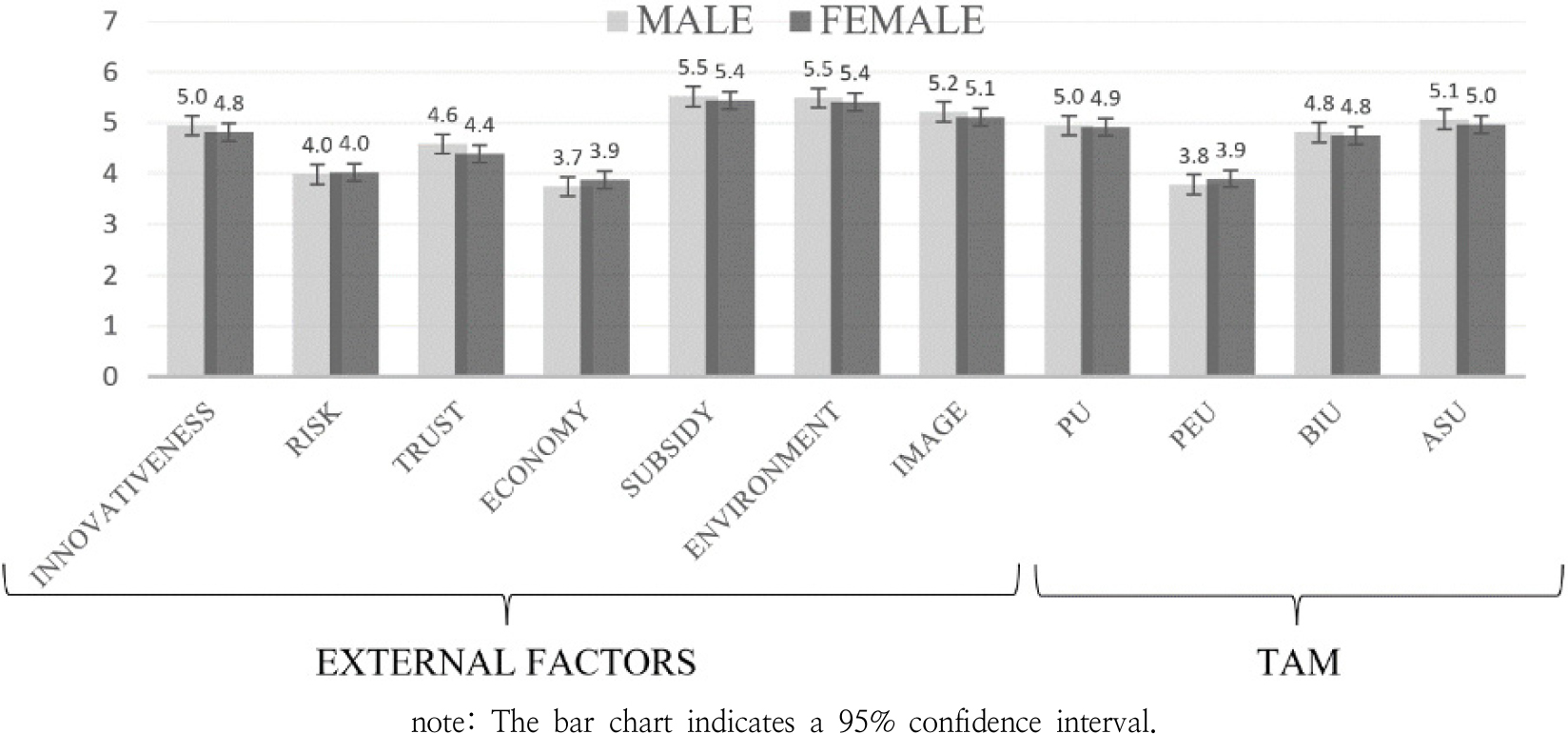
The average scores for the extended TAM elements are illustrated in Figure 2. The figure indicates that the female and male participants’ perceptions are not significantly different, as suggested by the confidence intervals. Although the differences are not significant, men tend to be slightly more innovative and trust EV technology more than women. The score for the economy item is the lowest, which may suggest that the survey participants do not strongly expect that the costs of EV purchase and maintenance will be cheaper than those of internal combustion engine vehicles. Meanwhile, the scores for subsidy and environment were found to be the highest. This indicates that subsidy is believed to be an important factor in the adoption of EVs as it can reduce the burden of the purchase cost. The high score for environment implies that most of the survey participants are well aware of the high payback value of EVs for the atmosphere.
HYPOTHESIS DEVELOPMENT FOR THE EXTENDED TAM
1. Connections and justifications in the TAM
This research employs the foundational TAM proposed by (Davis, 1989) which includes PEU and PU as key determinants of users' behavioral intention to use EVs. In this section, the TAM and extended TAM related hypotheses adopted in this study were described.
If the level of PEU is greater, individuals are more likely to believe they can accomplish tasks more quickly and with less effort, contributing to the overall PU.
Hypothesis (H1): The PEU of EVs is positively related to PU and consequently to use EVs.
People will have strong intentions to use EVs if they believe that this technology will enhance their performance and that they will be easy to use.
Hypothesis (H2): The PU of EVs is positively related to BIU and consequently to use EVs.
Hypothesis (H3): The PEU of EVs is positively related to BIU and consequently to use EVs.
If individuals have a positive intention to use EVs, it is likely that they will engage in the actual usage behavior of this mobility.
Hypothesis (H4): The BIU of EVs is positively related to ASU of EVs.
2. Connections and justifications in the extended TAM
External variables, such as social influence or EV characteristics, can directly or indirectly influence PEU and PU, thereby impacting users' BIU. This enhanced model integrates seven pivotal determinants to augment the iteration of the basic TAM: namely subsidy, environment, image, economy, trust, innovativeness, and risk. From the literature review of this study, it has been shown that those seven factors may influence the adoption of EVs.
Governments have provided financial incentives to attract early adopters of EVs, considering the expected environmental benefits of EVs. These incentives include both technology-specific policies, such as subsidies for EV consumers and technology-neutral policies, like emissions-based vehicle taxes. Some countries have reduced automobile taxes on EVs, while others have offered subsidies in addition to regular registration and circulation fees, resulting in a varied landscape of financial incentives (Sierzchula et al., 2014).
Hypothesis (H5): Subsidy for EVs is positively related to environment.
Someone who actively engages in eco-friendly practices, such as recycling, using renewable energy, or driving an EV, may view themselves as environmentally conscious and may project this image to others as part of their identity. Therefore, the environment can influence personal image by shaping values, behaviors, and perceptions related to environmental sustainability and responsibility. For instance, (Vongurai, 2020) reported comparable results, highlighting the strong link between the environment and the image associated with EVs.
Hypothesis (H6): Environment is positively related to image.
Moreover, the TAM proposed a robust correlation between image and PU. As described by (Moore and Benbasat, 1991), the image was defined as the extent to which the adoption of an innovation is perceived to elevate one's standing within their social network. By conforming to social norms, an individual attains inclusion and the social backing it provides, along with potential goal achievement, which is achievable only through collective action or group membership (Pfeffer, 1982). Hence, this research postulated that cultivating a positive image among peers within a social context can indeed increase the likelihood of perceiving EV efficacy favorably (Venkatesh and Davis, 2000).
Hypothesis (H7): Image is positively related to PU.
Additionally, innovativeness demonstrated a notable impact on trust. The results of this study echoed those of (Clegg et al., 2002), who found that the process of innovativeness was influenced by trust-related factors, likely serving as the principal influencer. Substantial levels of trust were deemed essential for the innovativeness process. This discovery also supported the notions proposed by (Bhalla et al., 2018), who posited a connection between consumer trust and innovativeness as factors shaping the perceptions of EVs for purchase.
Hypothesis (H8): Innovativeness is positively related to trust.
(Chircu et al., 2000) incorporate trust into the TAM, contending that trust in an e-commerce intermediary enhances PEU. Their rationale is that trust diminishes the necessity for consumers to comprehend, supervise, and oversee the situation, thereby simplifying the use of the technology and rendering it more effortless. (Gefen, 1997) and (Gefen and Straub, 2002) similarly discovered the impact of trust on PEU within the realm of e-services.
Hypothesis (H9): Trust is positively related to PEU.
The economic aspect could be associated with significant hurdles to adopting technology; if the expense is prohibitive, the technology becomes inaccessible. Consistent with the cost-benefit framework derived from behavioral decision theory (Beach and Mitchell, 1978; Johnson and Payne, 1985; Payne, 1982), the cost was found to be pertinent to PEU. Such an approach effectively explained why decision-makers adjusted their choice strategies based on variations in task complexity relative to cost.
Hypothesis (H10): Economy is positively related to PEU.
Studies have demonstrated that risks associated with product consumption have a detrimental effect on the intention to purchase branded products, various product categories, and e-services (Payne, 1982; Grønhaug et al., 2002; Featherman and Hajli, 2016). These risks are perceived as threats and are known to prolong the decision-making process to allow for further information gathering and learning (Mitra et al., 1999). EVs introduce multiple risks, such as the potential for battery fires stemming from vulnerabilities in lithium-ion batteries, the risk of electric shock due to high-voltage systems, and concerns regarding range anxiety and the availability of charging infrastructure. Additionally, challenges arise from the environmental impact of battery production and disposal, as well as vulnerabilities in the global supply chain for EV components. This research aimed to assess the extent to which consumer perceptions of risks associated with EV purchases influence their intention to buy EVs.
Hypothesis (H11): Risk is negatively related to ASU.
Gender differences play a crucial role in the adoption of AVs, with research indicating that men are more likely to adopt this technology compared to women. (Venkatesh et al., 2012) highlight that gender influences technology acceptance, with males generally displaying higher levels of behavioral intention to adopt new technologies due to greater enthusiasm for innovation and technological advancements. This trend is reflected in the adoption of AVs, where studies such as those by (Hohenberger et al., 2016) and (Hulse et al., 2018) show that gender differences exist in perceptions of AV safety and reliability, with men generally exhibiting more confidence and women expressing more concerns, potentially leading to a lower intention to adopt AVs among women. Furthermore, (Schoettle and Sivak, 2014) found that women are more likely to be cautious about new technologies, particularly when it comes to AVs, which they perceive as a higher-risk innovation. These findings suggest that gender differences significantly affect the adoption of AVs, with men demonstrating a stronger intention to adopt due to their greater enthusiasm for technology and lower risk perceptions.
Hypothesis (H12): Men and women differ in their perception of the acceptance of AVs.
RESULTS AND DISCUSSION
1. TAM
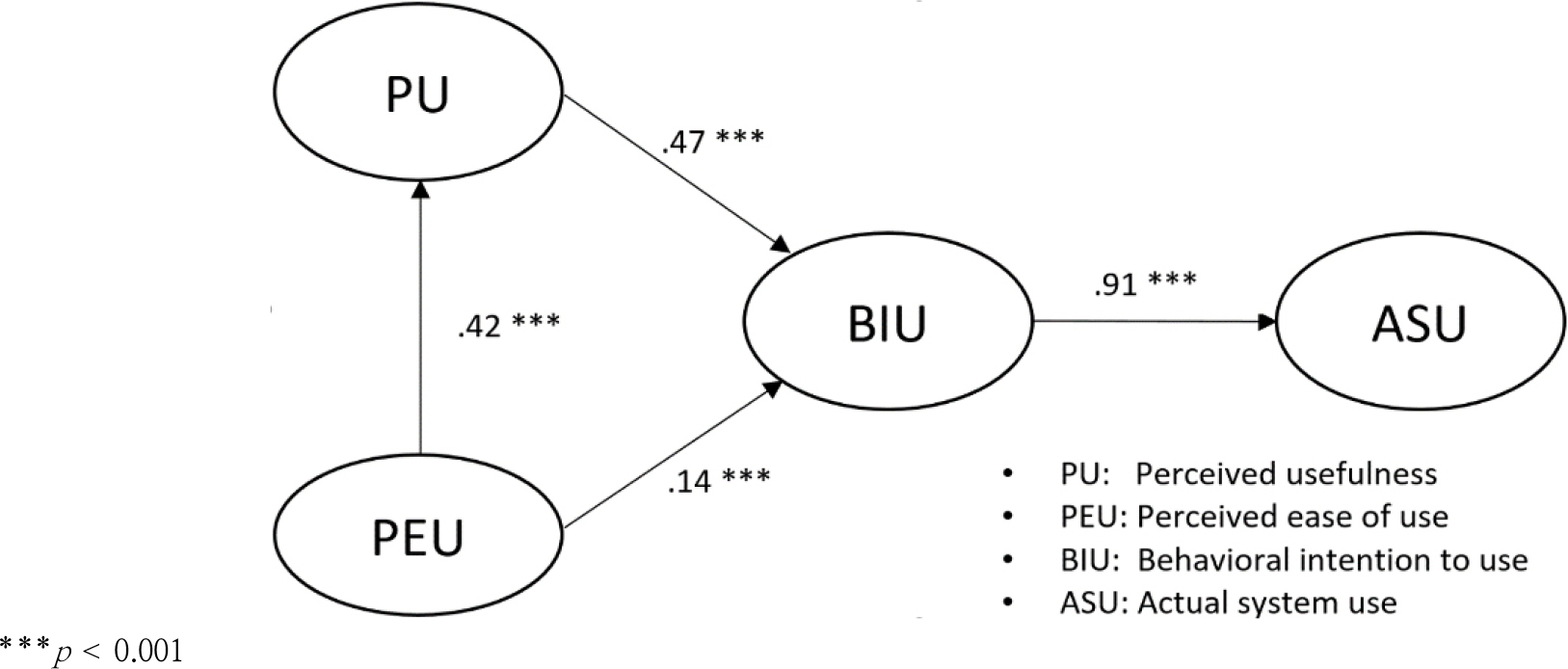
IBM SPSS Amos 24 SEM software was used to compute the descriptive statistics of the selected constructs of the main survey. To test the proposed connections in the model, covariance-based structural equation modeling (CB-SEM) method and confirmatory factor analysis were used. CB-SEM uses a statistical model to estimate and test correlations between dependent and independent variables and the hidden structures in between. A TAM was constructed as illustrated in Figure 3. It shows how latent variables or constructs in ovals are associated with each other. The Comparative Fit Index (CFI) and Root Mean Square Error of Approximation (RMSEA) are pivotal indices for assessing model fit in SEM. The CFI evaluates the improvement of the target model relative to a null model, with values closer to 1 indicating superior fit, where a threshold of 0.95 or higher denotes excellent model performance. In contrast, RMSEA provides an absolute measure of fit, emphasizing model parsimony and complexity, with values below 0.05 reflecting a close fit and those above 0.10 signaling poor fit. While CFI adjusts for model complexity without being overly sensitive to sample size, RMSEA penalizes over-parameterization, making both indices complementary. An optimal model exhibits a CFI near 0.95 and RMSEA below 0.05, though flexible thresholds are occasionally acceptable depending on the research context. The estimated TAM has a satisfactory CFI of 0.91; however, the RMSEA is 0.095, which is still an acceptable result according to (Browne and Cudeck, 1992) and (Jöreskog and Sörbom, 1993), who suggested that an RMSEA value of < .08 indicated a reasonable model–data fit. Note that all the extended TAMs shown later are all within the range of < .08 for RMSEA, suggesting a consideration of external variables may better explain the acceptance of EVs. The TAM also indicates that the considered factors are all significant. PU has more impact on BIU and ASU than PEU. That is, the impression of the ease of use of EVs has a relatively minor impact on the acceptance of this technology; thus, it is possible to deduce that the usefulness of EVs plays a more important role in buying an eco-friendly vehicle.
2. Extended TAM: Pooled model
An extended TAM was constructed including the already mentioned seven extra factors to the original TAM (Figure 4). The fit indices of CFI (0.902) and RMSEA (0.058) satisfied the required level of goodness of fit suggested in prior investigations (Anderson and Gerbing, 1988; Hoelter, 1983). The estimated model also showed that all the eleven hypothesized relationships were statistically supported at a significance level of 0.001.
The model demonstrated that BIU was mainly determined by two positive variables, PU (H2) and PEU (H3), as expected. Furthermore, ASU for EVs was defined by BIU (H4) and risk (H11). In the case of ASU, BIU (H4) showed positive significant effects, while risk (H11) had a negative impact. Regarding risk, this study found that when it increased by one unit, ASU was likely to decrease by 0.15 unit, as shown in Figure 4. Image was found to be directly or indirectly affected by both subsidy and environment. Indeed, it was observed that subsidy (H5) significantly impacted environment (H6), which in turn affected image. Subsidy was an important factor for the preservation of the environment. Due to subsidy, the environmental factor produced appropriate behavior and image in all users of EVs. Thus, the combination of subsidy and environment exerted a significant effect on PU through image. In addition, environment (H6) showed notable effects on image. This outcome was largely consistent with previous studies. For example, (Vongurai, 2020) observed similar findings, emphasizing that the environment and image of EVs were substantially interconnected. Furthermore, the extended TAM postulated a strong relationship between image (H7) and PU. According to (Moore and Benbasat, 1991, p.195), image was defined as “the degree to which use of an innovation is perceived to enhance one’s status in one’s social system.” By acting in accordance with social rules, a person “achieves membership and the social support that such membership affords as well as possible goal attainment which can occur only through group action or group membership” (Pfeffer, 1982, p.85). Consequently, this study suggested that having a positive image among compeers in a social circle can indeed boost the probability of having a favorable perception of EV productivity (Venkatesh and Davis, 2000).
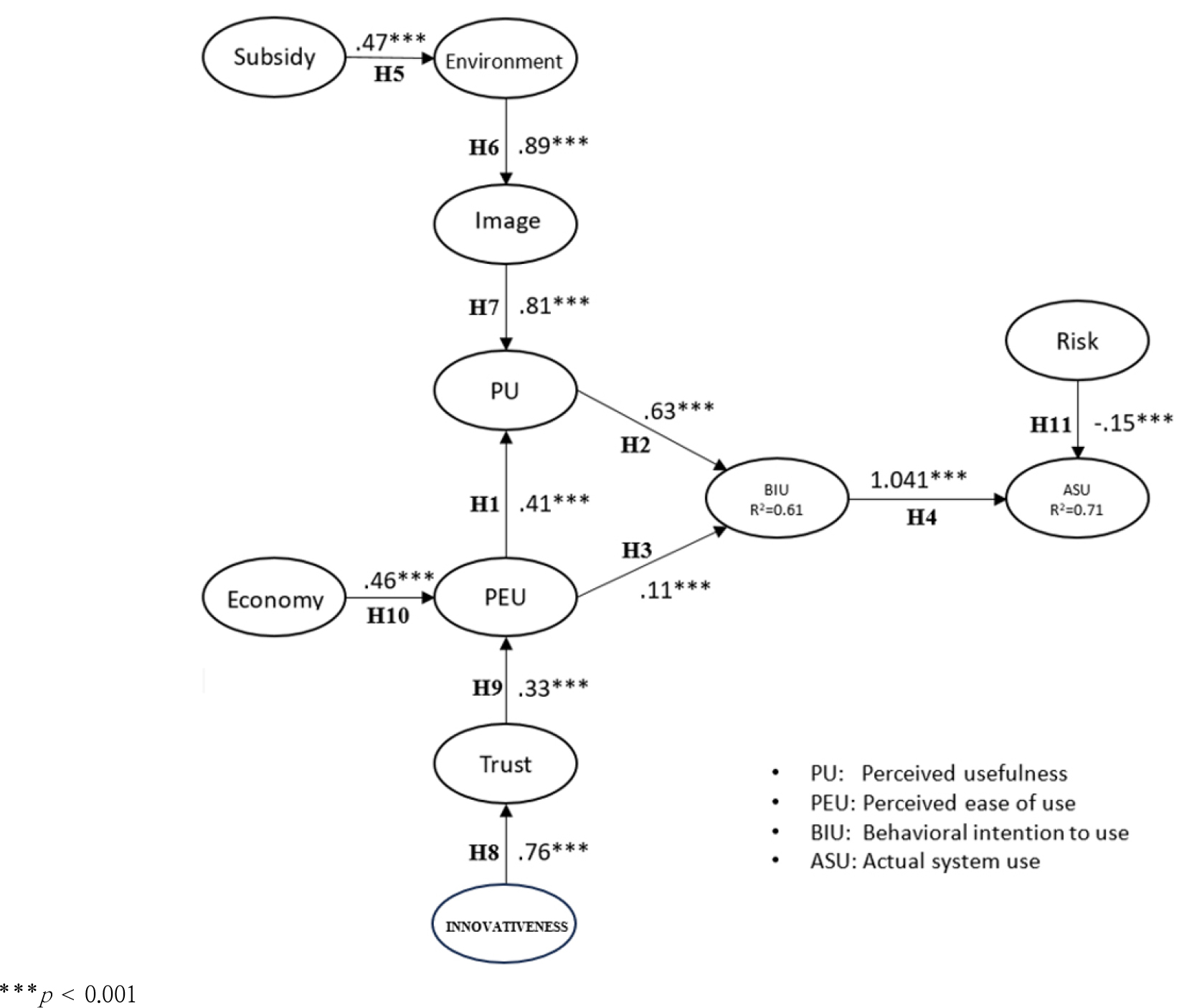
The model also suggested that favorable perceptions about economic benefits can exert significant impacts on people to adopt EVs. In particular, economy (H10) had a strong positive impact on ASU via PEU and BIU (Figure 4). The factor of economy may be linked to the substantial barriers to technology adoption; if the cost is too high the technology is unattainable. In accordance with the cost-benefit paradigm from behavioral decision theory (Beach and Mitchell, 1978; Johnson and Payne, 1985; Payne, 1982), cost was relevant to PEU. The selection of different alternatives was explained by this study as a rational trade-off between the strength required to make that selection and the quality of the choice that results. This approach was effective in explaining why decision makers modified their choice strategies in response to changes in task complexity relative to cost. Moreover, innovativeness (H8) exerted a significant effect on trust. The outcomes of this investigation supported those of (Clegg et al., 2002), who discovered that the innovativeness procedure was affected by aspects of trust, with this influence likely serving as the primary one. Significant quantities of trust were necessary for the innovativeness procedure. This finding also corroborated the ideas of (Bhalla et al., 2018), who suggested a link between consumer trust and innovativeness as determinants of the purchase perception of EVs.
Of the variance in BIU, 61% was explained by PU and PEU, whereas 71% of the variance in ASU was explained by BIU and risk. The standardized total effects of the constructs on the intention to use EVs were computed to highlight the most noticeable impacts of the used constructs in the suggested model on ASU. As presented in Figure 5, PU had the most influence on ASU, followed by image, environment, and PEU. The influence of factors such as subsidy, economy, trust, innovativeness, and risk on ASU had the least explanatory power, the last factor being negative.
3. Extended TAM: Male participants’ model
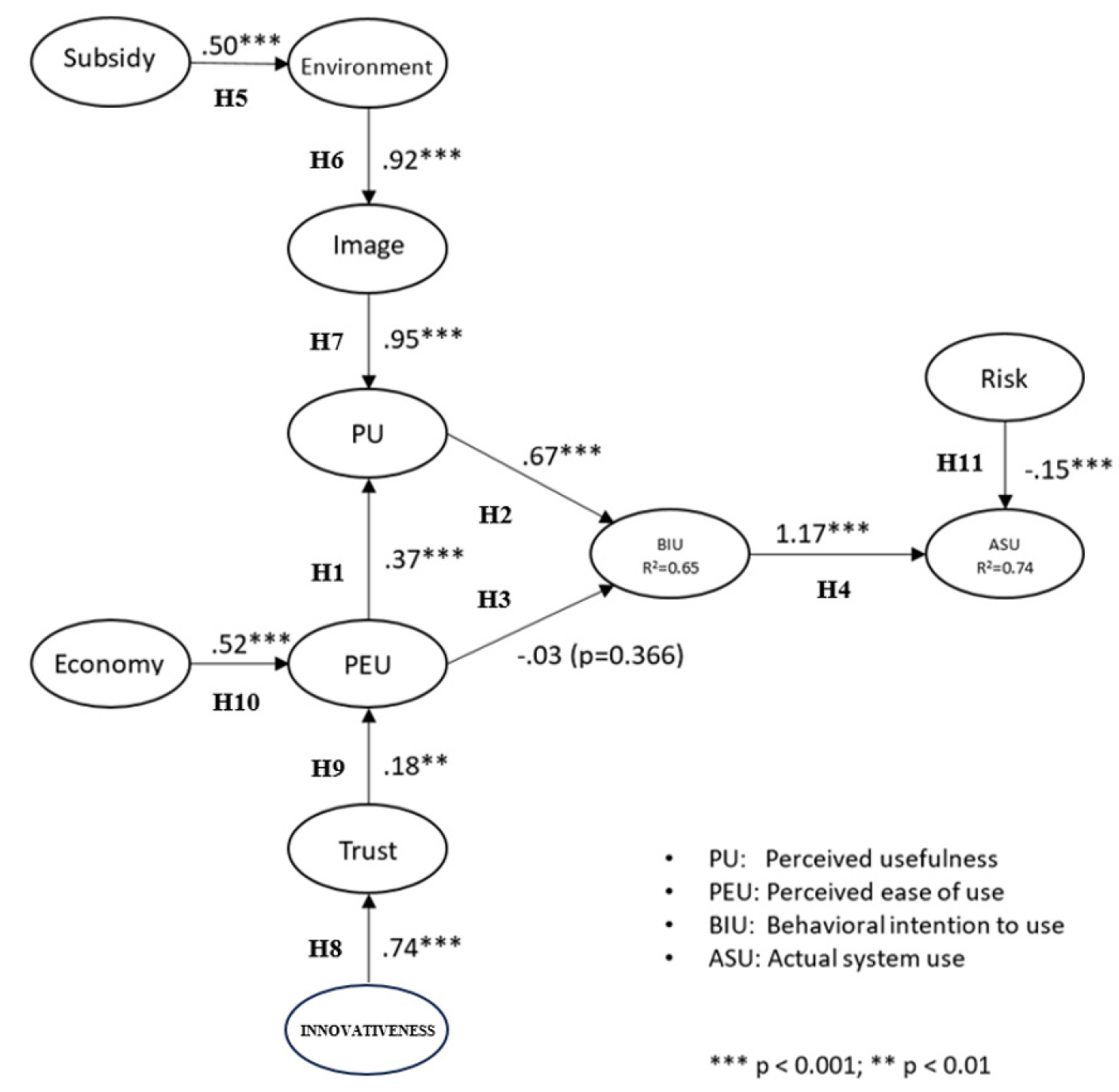
An extended TAM was developed considering only responses from male participants (Figure 6). The good-ness-of-fit indices for the model met the necessary criteria: 0.899 and 0.058 respectively for CFI and RMSEA. The fit indices indicated that the model properly matched the data. The structural correlations were determined by investigating the assumed links for men in the model. As seen in Figure 6 and Table 5, of the eleven hypothesized connections, ten were supported (p < 0.001), whereas the impact of PEU (H3) on BIU was not (p = 0.366). This indicated that there was insufficient evidence to conclude that there may be an influence of PEU (H3) on BIU for male participants. Thus, it could be concluded that for men PU was more important than PEU. The most important observation to emerge from this result was that men found EVs useful. A possible explanation for this may be that men enjoy driving and feel that EVs afford them a good image because they protect the environment and, according to this research (Figure 6), these factors make EVs useful because this confidence allows them to perform better in their daily activities.
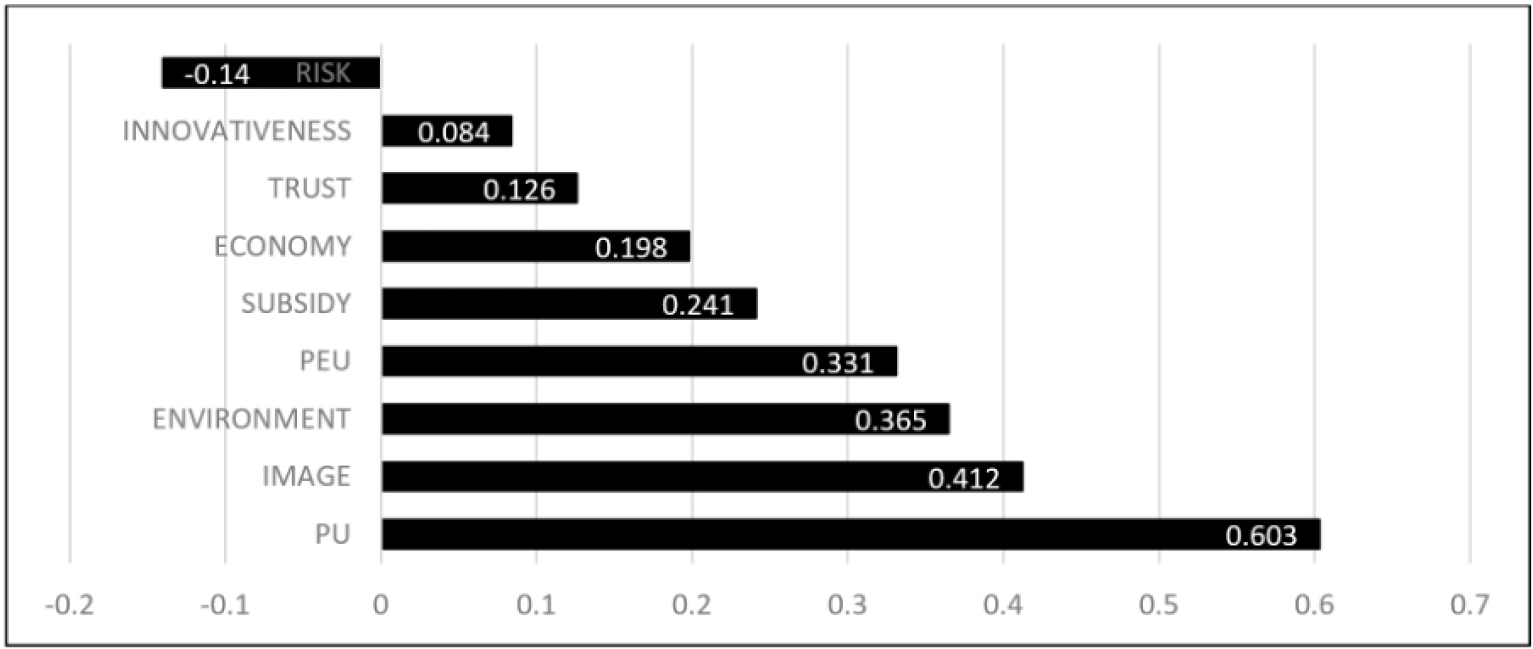
Figure 6 demonstrates that image (H7) has a significant effect on PU and environment (H6) on image. Innovativeness (H8) has a significant influence on trust, as does PU (H2) on BIU. Figure 6 also illustrates the intercorrelations between the variables that assess BIU (H4) and ASU. PU (H2) and PEU (H3) explain 65% of the variance in BIU, whereas BIU (H4) and risk (H11) explain 74% of the variance in ASU. To emphasize the most visible influences of the employed constructs in the model on ASU for men, the standardized total effects of the constructions on the intention to use EVs are computed. According to Figure 7, the most influential factor on ASU is PU, followed by image, environment, and subsidy, whereas factors such as PEU, economy, trust, and innovativeness have low impacts on ASU for men. Furthermore, risk negatively impacts ASU; as per Figure 7, this indicates that when risk increases by one, the ASU is likely to decrease by 0.15.
4. Extended TAM: Female participants’ model
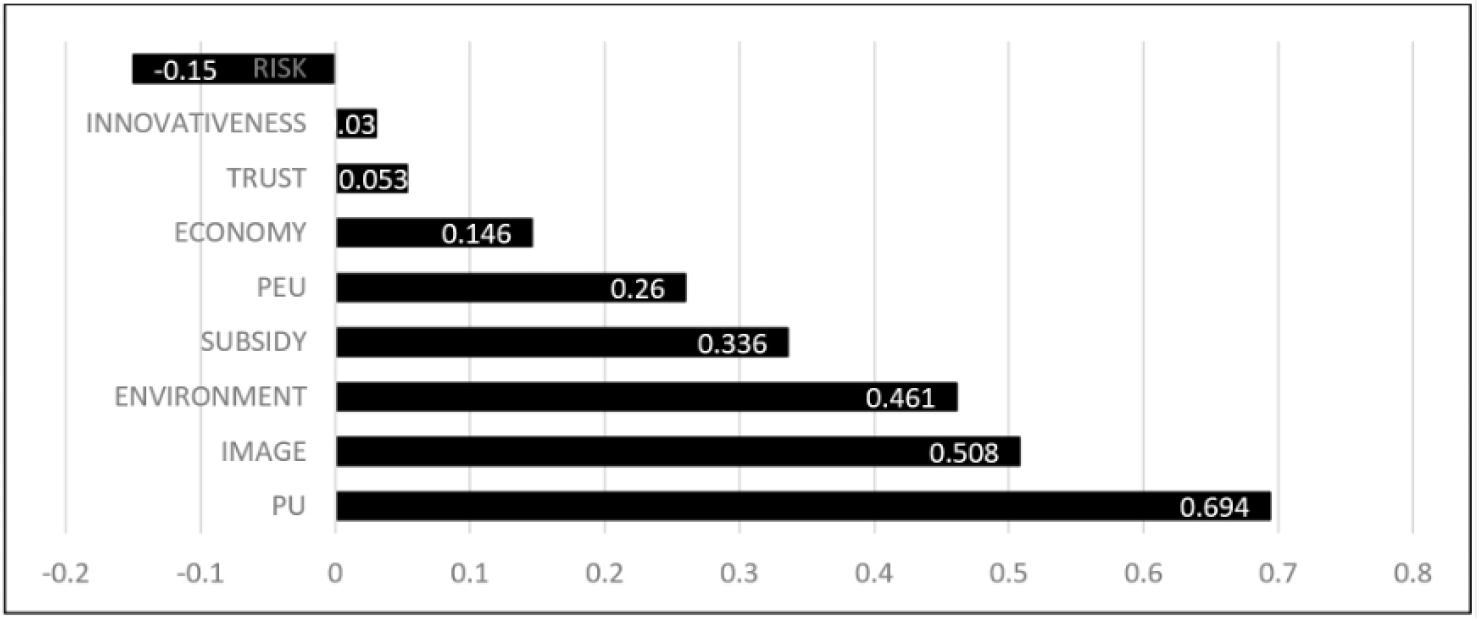
An investigation was conducted to analyze the links indicated in the model for women. The CFI and RMSEA satisfied the required criteria. The CFI had a fit score of 0.903, while the RMSEA had a fit score of 0.059. The fit indices for the model for women demonstrated that it correctly matched the data. The hypothesized linkages in the model for women were investigated to establish the structural correlations. As shown in Figure 8 and Table 5, 10 of the 11 hypothesized linkages were supported at a significance level of 0.001, while the impact of risk (H11) on ASU was supported at a level of 0.01.
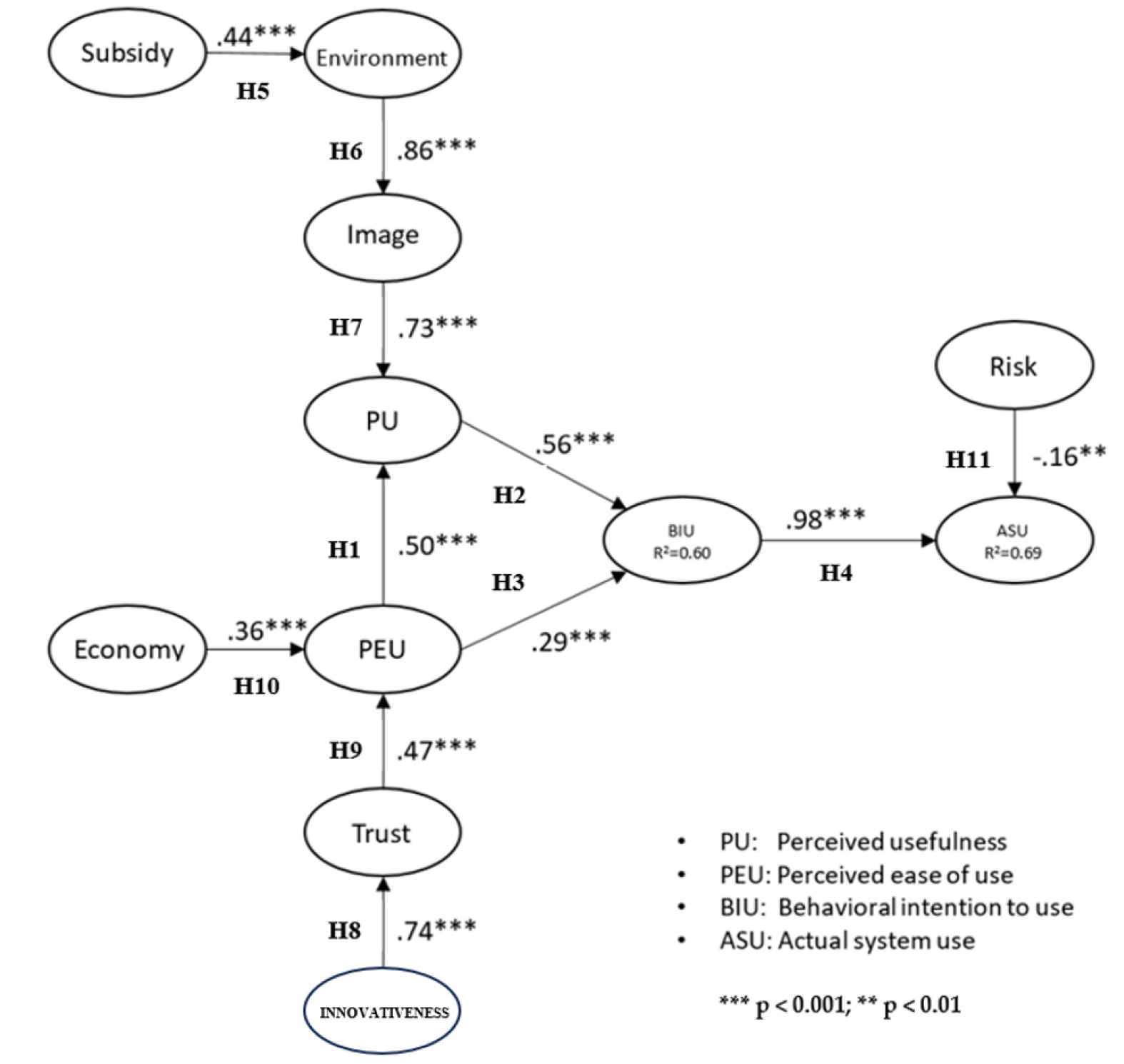
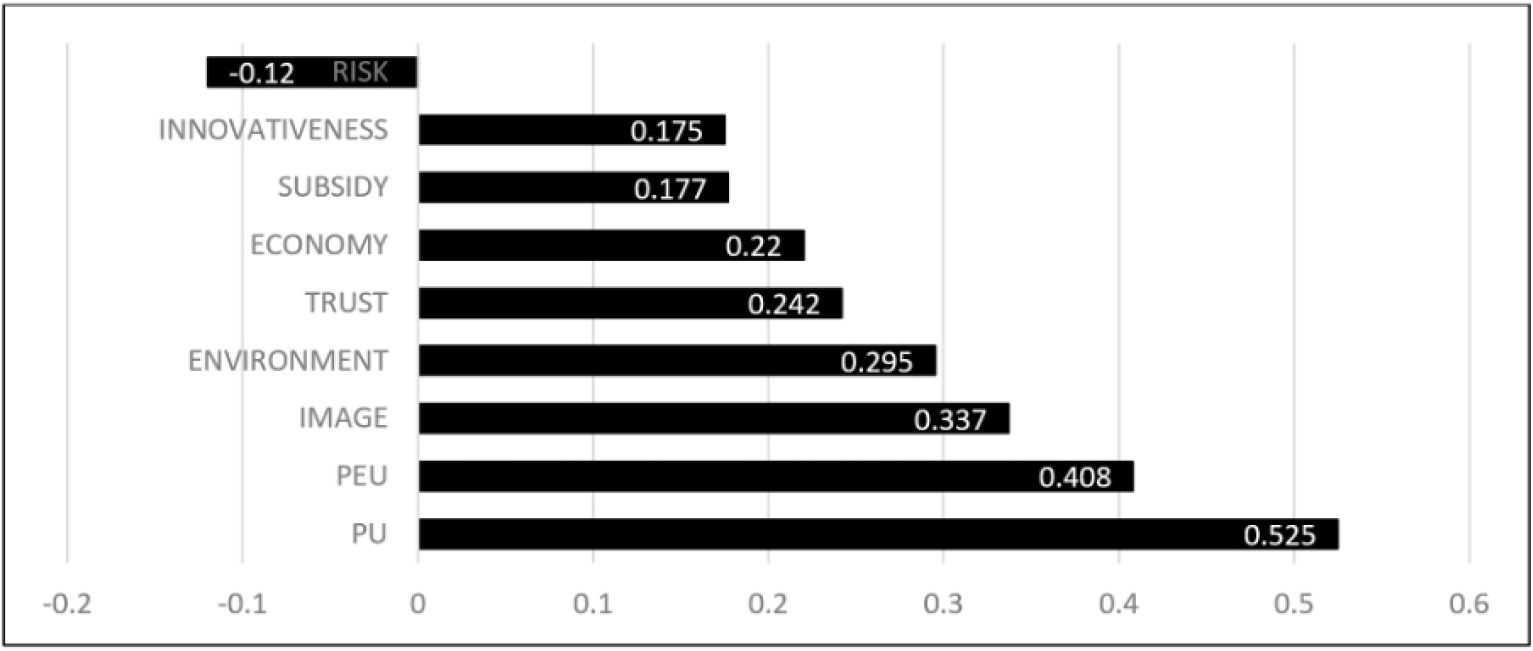
Furthermore, Figure 8 shows that environment (H6) has a substantial effect on image and innovativeness (H8) has a significant effect on trust. Image (H7) has a considerable effect on PU, and PU (H2) has a noteworthy effect on BIU. Figure 8 also presents the results obtained from the analysis of BIU and ASU. PU and PEU explain 60% of the variance in BIU, whereas BIU and risk explain 69% of the variance in ASU. The standardized total effects of the constructs on the intention to use EVs are computed to highlight the most evident effects of the used constructs on ASU in the suggested model for women. According to Figure 9, PU is the most impactful factor on ASU, followed by PEU, image, and environment. Additionally, risk negatively influences ASU.
5. Comparison
Unstandardized and standardized path coefficients were used complementarily to gain a comprehensive understanding of the relationships between the factors of the investigated models. While unstandardized path coefficients focus on understanding the practical implications of the actual magnitudes of the relationships between variables, standardized path coefficients help in comparing the relative strengths of relationships and identifying the most influential predictors. This study finds that men and women differ in how they perceive EV adoption. As an example, from the standardized total effects on ASU, PEU is more important for women. In particular, in the case of men, PEU is not statistically meaningful in explaining BIU, suggesting that men tend to be unconcerned about driving a different type of vehicle. The justification for this is that men spend more time behind the wheel. According to studies by the (Triplett et al., 2016), men spend approximately 25% more time behind the wheel and drive 35% more miles compared to women. (Hall, 2015; Gross, 2019). The idea that a man must be at the wheel could be a vestige of the belief that men should go to work and that women must be in charge of domestic tasks, or behind the notion that men must be in charge of machines because they can be dangerous and heavy. The fact is that men work more hours away from home and spend more time behind the steering wheel and, therefore, are more likely to adopt new automotive technologies more easily. Another notable finding is that image holds greater importance for men. When it comes to EVs, men tend to prioritize style, emphasizing the desire to assert masculinity through technology and the appeal of being in control. It is interesting to note that in all the eleven supported cases of Table 5, the only negative variable is risk. In addition, although for both men and women, the perception of EVs is negatively affected by the risk of this technology, women are more risk averse than men to EV adoption. The rationale behind this approach is the assumption that most women are afraid of facing areas almost completely dominated by men such as automobiles. Additionally, most women fear the unknown because it creates risk or danger to their family members, especially their children, and that makes them more cautious, acting with care and reserve to prevent any damage or injury (Hand and Lee, 2018).
Small differences in other construct relationships also hold psychological and behavioral significance. In psychological and behavioral sciences, minor variations in the strength of relationships between constructs can have meaningful implications, as they may indicate underlying differences in cognitive processing, decision-making, or behavioral tendencies. For instance, in this study (Table 5), Trust on PEU shows a stronger effect for women (0.466 vs. 0.182 for men), suggesting that trust plays a more crucial role in shaping women’s perceptions of ease of use. Similarly, Economy on PEU has a greater impact on men (0.518 vs. 0.360 for women), implying that economic considerations more strongly influence perceived ease of use in male respondents. These seemingly small variations highlight different psychological motivations across genders—men may prioritize cost efficiency, whereas women may place greater emphasis on trust in technology when assessing ease of use. Additionally, the relationships between Image on PU and PEU on PU also show differences, indicating that while both genders perceive image and ease of use as relevant to usefulness, the degree of influence varies. These differences can accumulate and shape broader behavioral trends in EV adoption, affecting marketing strategies, user engagement, and policy design.
Table 5.
Regression weights for the male and female participants’ models
| Men | Women | |||||
| Unstandardized estimate | Standard error | Unstandardized estimate | Standard error | |||
| INNOVATIVENESS | → | TRUST | .739*** | .073 | .744*** | .076 |
| SUBSIDY | → | ENVIRONMENT | .497*** | .052 | .437*** | .045 |
| TRUST | → | PEU | .182** | .045 | .466*** | .069 |
| ECONOMY | → | PEU | .518*** | .041 | .360*** | .051 |
| ENVIRONMENT | → | IMAGE | .915*** | .118 | .856*** | .103 |
| PEU | → | PU | .366*** | .110 | .497*** | .080 |
| IMAGE | → | PU | .954*** | .093 | .729*** | .081 |
| PEU | → | BIU | -.031 | .085 | .291*** | .060 |
| PU | → | BIU | .670*** | .101 | .555*** | .047 |
| BIU | → | ASU | 1.171*** | .094 | .981*** | .074 |
| RISK | → | ASU | -.148*** | .044 | -.157** | .052 |
The results in this section indicate that the comparison between man and women was successful in identifying gender differences in the acceptance of the use of EVs. Together, these findings provide important information about gender perspectives that suggests that men’s and women’s fears and feelings should be incorporated into the design, implementation, monitoring, and evaluation of marketing strategies, policies, and programs to ensure that both are satisfied with the use of EVs.
CONCLUSIONS
This study’s aim was to investigate gender differences in the acceptance of EVs in South Korea, with a particular emphasis on user perceptions and attitudes utilizing online survey data. This study considered users’ attitudes and views of EVs, such as PU, PEU, BIU, and ASU. In addition, innovativeness, trust, economic benefits, support for purchase subsidies, environmental aspects, image, and risk factors were included to prognosticate EV adoption. A SEM model was implemented to scrutinize and uncover the mechanism of technology acceptance of EVs. The statistical outcomes demonstrated that the primeval TAM was effective in clarifying the acceptance of EVs by the respondents. Furthermore, an extended TAM model was constructed to show the acceptance of EVs and relationships among the seven factors. Subsequently, the data were categorized by gender. In the pooled model, the results for the total standardized effects on ASU were calculated, and these reflected the general state of EVs. First, the PU of EVs strongly influences the acceptance of EVs. According to (Davis, 1985), PU refers to users’ subjective view that specific technologies can improve the execution of their tasks. The results of this study indicate that people think that the use of EVs improves their work performance. Second, in initiatives to disseminate EVs, drivers’ viewpoints on the image and environmental elements of EVs should be pondered. As with prior studies that have noted the importance of image and environment (Vongurai, 2020), this research found these two factors significant for the acceptance of EVs. This is also predictable because the model shows that the strongest factor on ASU, PU, is affected by image (H7) and environment (H6). Although image and environmental factors are important motivators for utilizing renewable energy in automobiles, this study found that political backing, economic benefits, and risk must also be addressed in order to understand people’s behavior and inclination to use EVs.
The most obvious findings to emerge from this study are that the model shows that purchase subsidy affects environmental aspects (H5), which in turn affect social image (H6). Meanwhile, innovativeness affects trust (H8), and similarly, trust (H9) and economic (H10) benefits affect PEU. These relationships are satisfactory for both men and women. One of the most significant findings to emerge from the analysis of the standardized total effects on ASU for men and women in this study is that for men, PU and its factors are more important than for women. However, for women, PEU and its factors are more important than for men. These results explain that in the case of men, PU, image, environmental concerns, and subsidies for the purchase of EVs are more important than in the case of women. In contrast, factors such as PEU, trust in EVs, innovativeness, and economic benefits have stronger effects on ASU for women than for men.
Even though this study is based on a small sample, the findings suggest the following conclusions. For the male participants’ model, the connection between PEU and BIU (H3) was not supported. This is another way of explaining that for men PU is more important than PEU. This can be explained by the fact that men like to drive and feel that EVs provide them a good image. Regarding women, it is clear that PEU is more important than PU because women may feel more of a burden in driving tasks. Therefore, PEU should be promoted for women in endeavors to promulgate the purchase of EVs. These findings suggest the need for gender-tailored strategies in policy development, technology, and product design. Policies should cater to these differences by emphasizing economic incentives and environmental messaging for men, while focusing on ease of use, trust, and financial benefits for women. Additionally, automakers and researchers can design EVs with gender-specific features to enhance adoption, such as improving ease of use for women and highlighting performance and environmental benefits for men. Consequently, when academic and industry researchers, as well as legislators, seek to encourage purchases of EVs, these aspects should be considered. This research contributes to the literature on EVs by analyzing the central roles of the investigated components and their major relationships while distinguishing between men’s and women’s preferences. Furthermore, automakers should develop systematic and user-centered programs to increase the PU of EVs. From a practical standpoint, investigators and designers may use these findings to improve EV sales by boosting the social image of EVs and emphasizing their perceived environmental benefits. With society's rising environmental concerns, a well-designed strategy could persuade potential purchasers to choose EVs as a mode of transportation. These findings can inform targeted strategies to address barriers and motivators and shape policy and regulation to support EV transition to meet the needs of EV owners and potential buyers. Moreover, this study can enhance consumer education and public awareness, stimulate innovation in the EV industry, and contribute to sustainability and climate action efforts. In a business-to-business context, organizations may adopt EVs to reduce operational costs, meet sustainability goals, or modernize their fleets. In a business-to-consumer framework, individual consumers may choose EVs due to environmental concerns, cost savings, government incentives, or appreciation for technological advancements. These diverse motivations underscore the multifaceted nature of the EV market and the importance of gender segmentation strategies to facilitate the widespread adoption.
LIMITATIONS
While this study successfully investigated gender differences in the acceptance of EVs in South Korea, there were some limitations. The study's findings may be constrained by the size and representativeness of the South Korean sample. South Korea's distinct cultural context and unique gender roles and technology attitudes may restrict the applicability of these findings to other countries. Generalizability beyond South Korea should be approached with caution. Further studies that consider the variables of users’ perceptions of and attitudes toward EVs according to gender will need to be undertaken. Another important limitation of this study is that stated purchase intention does not necessarily translate into actual purchase behavior. While our findings suggest a high level of interest in EV adoption, adoption in South Korea is influenced by additional factors such as financial constraints, infrastructure availability, government incentives, and evolving consumer preferences. Self-reported intentions may also be subject to social desirability bias or hypothetical optimism, leading to overestimation. A longitudinal observation of changes in research participants’ comportment will be useful in establishing a stronger causal link between EV users’ perceptions and attitudes by gender and the gap between stated intention and actual purchase behavior. Furthermore, transversal observations encompassing a broader variety of customers, for instance, from cities outside South Korea and those with varying levels of EV knowledge, can help illuminate the bigger panorama of contrasting EV purchase intentions by gender. Furthermore, the measurement items used in the survey refer to eco-friendly vehicles in general (electric and hydrogen vehicles) rather than exclusively to EVs. While EVs are a representative subset of eco-friendly vehicles, the broader terminology may have influenced respondents' perceptions and interpretations. Future studies could refine the measurement items to focus solely on EVs, ensuring a more precise alignment between the research topic and survey items. Additionally, further research could explore whether the distinction between eco-friendly vehicles and EVs affects consumer attitudes and acceptance differently across gender groups.
Although we observe differences in the size of the parameters in Table 5, direct comparisons between them are challenging due to the methodological constraints of the current analysis. Separate statistical verification of these differences by gender is necessary to draw more robust conclusions. In addition, since the primary focus of this study is on gender differences in EV acceptance, more in-depth discussion and post-analysis are required to fully understand the implications of these differences. Future research should explore these aspects further, using more granular statistical methods to validate the observed differences and refine the conclusions drawn in this study. It is also important to note that, this research acknowledges that the data collected in 2019 reflects a pre-COVID context, capturing market dynamics during a period when electric mobility was primarily driven by innovators and early adopters. Since then, the market has undergone significant changes, particularly due to the impact of the COVID-19 pandemic, which has influenced buyer behavior, demographics, and the overall adoption rate of EVs. Recognizing these shifts, we will conduct a follow-up study to assess post-COVID trends in electromobility, incorporating new data that reflects changes in factors such as charging infrastructure, vehicle options, subsidies, and safety concerns. This new data will enable a comparison of pre- and post-pandemic perceptions, offering a more comprehensive view of how the market has evolved over time. While the findings from 2019 provide valuable insights into the early stages of EV adoption, the follow-up study will help contextualize these findings in light of recent developments and offer a more current perspective on the state of the market. Moreover, in future, scholars can explore EV buying decisions and conduct comparative studies incorporating the differences between preferences of men and women for EVs. In this effort, additional demographic variables such as age, income level, employment, residential location, homeownership, and education level may be considered by applying various methodological approaches, which may include machine learning, deep learning, and multiple-criteria decision-data interpretation.